Why Sealing Fails After Dehydrogenation — and How to Fix It
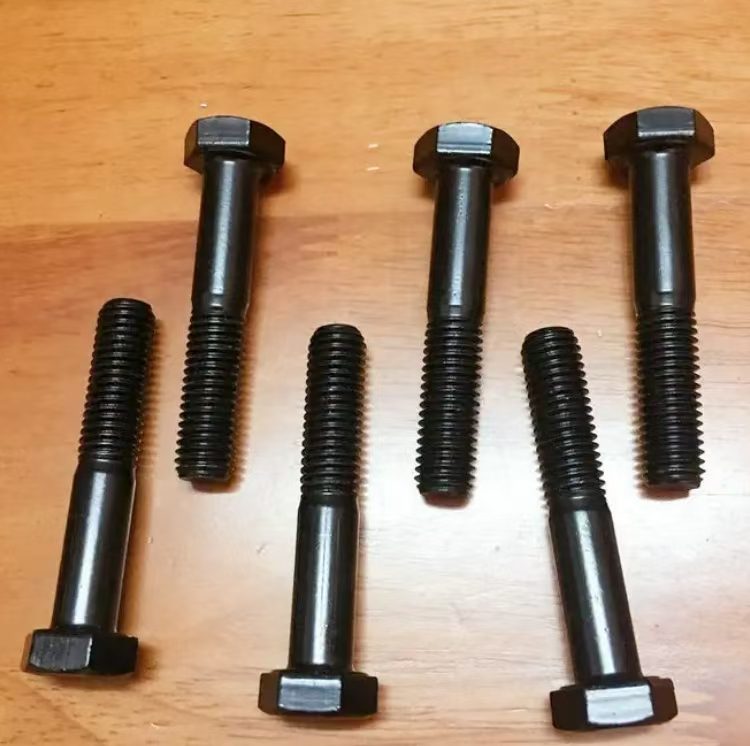
Dehydrogenation is mandatory for high-strength zinc-plated fasteners: hydrogen absorbed during pickling and plating has to be driven out before it causes delayed brittle fracture. The bake is typically 190–220 °C for four to twenty-four hours. The problem is that this is exactly the temperature range where most organic sealer films start to fail.
The symptom is consistent across plants: a part that passed 96 h neutral salt spray before baking drops to 48 h or less afterwards, sometimes with a colour shift or a chalky surface. The sealer is blamed, the bath is replaced, and the same thing happens on the next batch.
What the bake actually does to the film
- Oxidation of the organic phase. Resin and wax components oxidise above roughly 150–180 °C. The film does not disappear — it loses its barrier function, so water and chloride reach the zinc surface much faster.
- Loss of residual surfactants and coalescing agents. These help the film form uniformly at room temperature. Bake them out and the film becomes porous.
- Differential shrinkage. The film shrinks while the zinc substrate expands. Micro-cracks open, especially at thread roots and edges where the film is thinnest.
- Water trapped under the film. If parts enter the bake wet, the vapour pressure lifts the film locally. Blisters look like spots of white rust after the salt-spray run.
Sequence first: the four possible process routes
| Route | What it means in practice |
|---|---|
| Seal → bake | The common route. Only works if the sealer survives the bake temperature — otherwise corrosion resistance is lost after dehydrogenation. |
| Bake → seal | Sealer never sees the bake, but the parts are handled and stored bare between the two steps, and the film is applied to a heat-treated, sometimes oxidised surface. |
| Bake → seal → low-temperature cure | Two thermal steps. Better film integrity, higher energy and handling cost, longer lead time. |
| High-temperature sealer in one step | Seal first, then dehydrogenate; the film must retain corrosion resistance at the bake temperature. Requires a sealer whose TDS states this explicitly. |
Diagnosing: bake or bath?
Before changing chemistry, run one controlled comparison on the same production batch:
- Take plated parts from the same rack, same zinc thickness, same passivation.
- Seal half of them under production conditions; keep the other half unsealed.
- Bake one sealed group and one unsealed group together at production temperature and time.
- Run all four groups through neutral salt spray side by side and record first white rust.
Read the result like this: if the sealed + baked group falls to roughly the level of the unsealed + baked group, the film is being destroyed by heat. If the sealed group is poor even without baking, the problem is the bath or the application, not the temperature.
Four fixes, in order of cost
- Verify the bake profile. If actual part temperature overshoots the specification, fixing uniformity may recover performance without changing chemistry.
- Reduce film weight. A thinner film has less organic mass to oxidise and less internal stress. If the specification allows, go to the lower end of the concentration range.
- Dry before baking. Remove free water with a short air-blow or a low-temperature pre-dry. This alone removes a large share of blister-type failures.
- Switch to a sealer rated for the bake temperature. Look for an explicit TDS statement such as "no discolouration at 250 °C, corrosion resistance retained after dehydrogenation". If the TDS only gives a curing temperature, it says nothing about surviving a 200 °C bake.
What to ask a supplier
- At what temperature and for how long was the "after bake" corrosion data generated?
- Is the salt-spray figure quoted with or without a dehydrogenation bake?
- What is the recommended film weight, and how is it measured on a production part?
- Does the film need a separate cure, and at what temperature?