White Rust on Zinc-Plated Parts: Five Causes and How to Separate Them
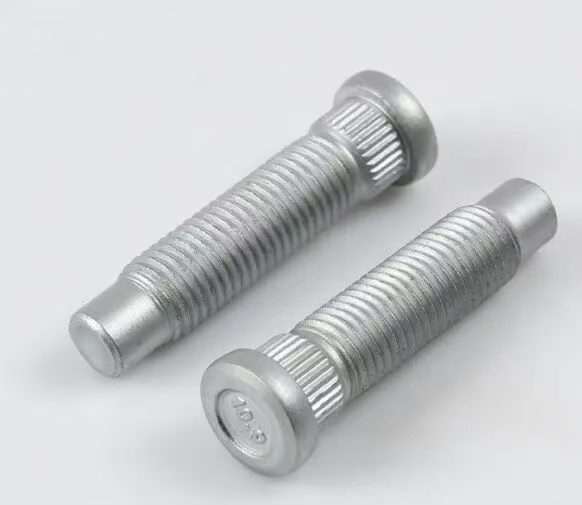
White rust — the powdery white to grey deposit on zinc surfaces — is zinc oxide and zinc hydroxide. It forms when zinc is exposed to moisture and oxygen without enough carbon dioxide to build a protective carbonate layer. It is not a coating defect in itself, but the way it appears tells you where the process is leaking.
1. Zinc thickness below the local minimum
What you see: white rust concentrated on edges, thread flanks and high-current-density areas, or on parts from one position on the rack.
Check: coating mass (g/m²) or thickness on the failed area, not on a flat reference coupon. Edges can be 30–50 % thinner than the nominal figure.
Fix: racking and shielding, current density distribution, and a specification that states where the minimum applies. More sealer cannot compensate for missing zinc.
2. Passivation film incomplete or wrong type
What you see: white rust appears in patches with a visible boundary, often where the part was in contact with the rack or another part.
Check: contact marks, passivation bath pH and concentration, immersion time, and drying temperature. A film that is wiped or rubbed before drying is already damaged.
Fix: rack contact points, bath analysis, air-blow instead of wiping, and drying that does not overheat a trivalent film.
3. Rinse water carrying contamination
What you see: white rust on the whole batch, worse after a weekend or a shutdown.
Check: final rinse conductivity and pH, and whether the rinse tank is static. Static rinse water accumulates zinc, iron and passivation drag-in; it deposits them back onto the part.
Fix: counter-flow rinsing, conductivity-based dumping, and a final rinse with deionised water where the specification allows.
4. Storage and packing conditions
What you see: parts are clean at despatch and show white rust on arrival, typically in the middle of a carton or on the bottom layer.
Check: packing while warm, plastic bags closed with residual moisture, condensation during transport, and storage in an unventilated area.
Fix: cool before packing, use desiccant or vented packaging, and avoid direct floor contact. This is a logistics fix, not a chemistry fix — and it is one of the most common causes of "our sealer failed" claims.
5. Sealer film incomplete, too thin, or applied to a wet surface
What you see: white rust at thread roots, blind holes, overlapping surfaces and drip points — the places the film did not reach.
Check: film weight on a production part, coverage at thread roots, drip time, bath concentration, and whether parts entered the bath wet.
Fix: racking and orientation, drip time, concentration at the low end of the validated range, and pre-dry if the bath is water-based. Increasing concentration is the least effective of these and increases film stress.
How to separate the five
- Photograph the pattern. Edges and threads → thickness or coverage. Whole batch → rinse or passivation. Carton interior → storage.
- Take one part from each stage: after plating, after passivation, after sealing, after packing. Run salt spray on all four. The stage where performance collapses is the culprit.
- Record first white rust, not "failed at 96 h". A drop from 72 h to 24 h points at a different mechanism than a drop from 96 h to 72 h.